Brewery Payroll Costs: How to Split Taproom vs Production in Your P&L
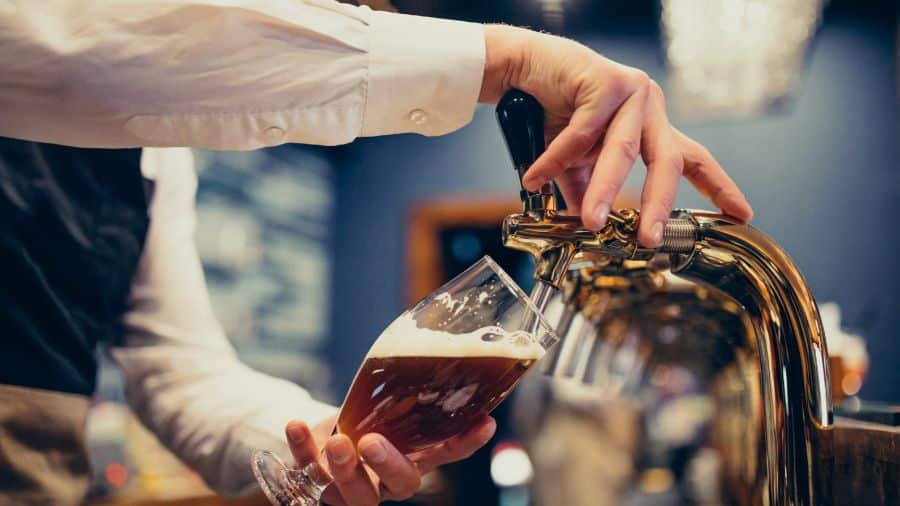
Brewery payroll is doing two very different jobs at once if you run both a taproom and a production side. The person pouring pints is earning taproom revenue on the spot, while the person in the cellar is building the product that everything else depends on.
Both jobs matter, but they belong in different parts of your profit and loss statement (P&L), and lumping them together is one of the most common reasons brewery owners can’t tell where their margins are going.
We’ll walk through where each role goes, how to handle people who do both, and what the split tells you once it’s in place.
Brewery Payroll Allocation Is What Makes Your P&L Readable
Labor is one of the biggest lines on any brewery P&L, so when it lands in the wrong bucket, every margin number below it gets distorted. Our guide to financial metrics for breweries puts labor at 25-40% of revenue for taproom-focused breweries, which is a huge share of the business to leave unsorted.
When production and taproom wages sit in one line, you can’t see whether your beer is profitable to make or whether your taproom is profitable to run. Lenders, partners, and your own gut check all depend on seeing those two answers separately.
Production labor is part of the cost of making beer, so it belongs in cost of goods sold, or COGS, and lowers gross profit, while taproom labor is the cost of selling and serving, so it sits below gross profit in operating expenses.
Every Brewery Role Belongs To One of Three Departments
For a typical brewery, the cleanest setup is three buckets: production, taproom, and general and administrative, or G&A, which is the overhead that keeps the lights on for the whole business.
Production covers your head brewer, assistant brewers, cellar staff, packaging crew, and anyone working in the brewhouse, including seasonal help during a big brewing push. Their wages are a direct cost of the beer, so they reduce gross margin.
Taproom covers beertenders, servers, event staff, and your taproom manager. Their wages are a selling and service cost that shows up below the gross profit line.
G&A picks up your office manager, marketing team, and some, or all, of your owner wages/guaranteed payments. These roles support every channel at once, so forcing them into production or taproom just muddies both.
This three-way split is the backbone of how our brewery accounting team sets up the books, and all our clients run on the same chart of accounts so nothing ends up in the wrong place.
What Counts as Production Payroll vs Taproom Payroll in a Brewery?
Production payroll is the wages, payroll taxes, and benefits for anyone whose main job is making beer, and taproom payroll is the same set of costs for anyone whose main job is selling and serving it.
A quick test settles most gray areas: would the role still exist if you closed the taproom tomorrow and only brewed for distribution? If the answer is yes, it’s production.
Then flip it around and ask whether the role would still exist if you kept the taproom open but stopped brewing and poured someone else’s beer. If yes, it’s taproom.
Payroll cost isn’t just the hourly wage, either. Employer payroll taxes, workers’ comp, and benefits should follow each person into whichever department their wages land in, otherwise one side of the business looks cheaper than it really is.
Those two questions sort out most of your team. Where they get harder is with people who split their week between the brewhouse and the bar.
How Do You Split Payroll for Brewery Employees Who Work Both Taproom and Production?
Time-based allocation is the practical answer, and in a small brewery it can cover half your staff. Estimate the share of each person’s hours spent in production versus the taproom, then split their payroll cost by that same ratio every pay period. If you use a payroll provider, like Gusto, you can setup 2 different pay rates so that your payroll wages, taxes and benefits are split and recorded into Xero automatically into production and taproom.
It doesn’t need to be tracked to the minute, but it does need to be reasonable and applied the same way every month. If your assistant brewer spends roughly four days a week in the brewhouse and one day covering taproom shifts, their pay gets split the same way.
The hours themselves come from your time clock or POS, since that’s where shift-level detail lives. Your books only need the resulting split, so a short monthly note from you or your manager is usually enough.
We see this a lot in small production breweries where the head brewer also covers the taproom on weekend afternoons. With all of that person’s pay sitting in production, the taproom looked leaner than it really was and the beer looked more expensive to make than it really was.
Once the owner started splitting those weekend hours out, the taproom’s true labor cost showed up, and it changed how they thought about weekend events and whether it was time to hire a taproom-only person.
Brewery Payroll Allocation Changes Both Gross Margin and Operating Margin
Production labor lowers gross margin because it lives in COGS, while taproom labor lowers operating income because it sits below gross profit.
Gross margin tells you how efficiently you make beer, and operating margin tells you how efficiently you run the whole place. When taproom wages get buried in COGS your brewing looks worse than it is, and when brewers get buried in taproom expenses your gross margin looks healthier than it should while the taproom looks bloated.
Our same metrics post puts brewery COGS at about 20-40% of revenue depending on sales mix and production setup, and misplaced labor is one of the easiest ways to land outside that range for the wrong reason. Our brewery budgeting best practices post uses a 40% gross margin as the baseline, which makes a good gut check once the split is done.
For breweries that sell through both the taproom and wholesale distribution, this separation is also how you figure out which channel deserves more of your time and money. Margins show you where the money lands, but they don’t tell you whether the people you’re paying are earning it back.
Labor Efficiency Ratio Shows Whether Brewery Payroll is Paying off
For a brewery, labor efficiency ratio (LER) is gross margin divided by labor cost, and it tells you how many dollars of margin each dollar of payroll brings in.
Our guide to brewery metrics to track sets the target at 2.0 or higher for your taproom, meaning every $1 of labor produces at least $2 of gross margin, and anything under 1.5 is a red flag.
LER is only trustworthy when labor is sorted correctly. If Production wages leak into Taproom your LER looks worse than your team’s actual output.
Looking at it by department is where it gets really useful, since a taproom LER that slides while production holds steady usually points at scheduling rather than brewing. You’ll only spot that kind of slide if the split happens the same way every month.
Xero and Syft Keep Brewery Payroll Allocation Clean Every Month
All our clients run their books in Xero, and for a brewery that means taproom wages, production wages, and admin wages each map to their own account when payroll posts.
Xero holds the totals by account rather than shift-by-shift detail, so the hours behind any split still come from your time clock or POS. What Xero gives you is a P&L where taproom labor, production labor, and G&A labor are separated so your labor metrics can be reviewed accurately.
Syft sits on top of Xero and turns those totals into trends, so you can watch labor as a % of revenue and your LER month over month without rebuilding a spreadsheet every time.
That kind of visibility is what lets you catch staffing drift in month two instead of finding it at year-end, and it keeps the monthly habit short: confirm the dual-role splits, check department labor percentages, and get back to brewing.
If you want to see how labor fits into the rest of the production picture, our post on how brewery production growth can hurt your margins is a great next read.
And if you’d like a second set of eyes on how your payroll is sorted today, reach out to our team and we’ll walk through your P&L structure with you.
Until next time!

By MATT CIANCIARULO